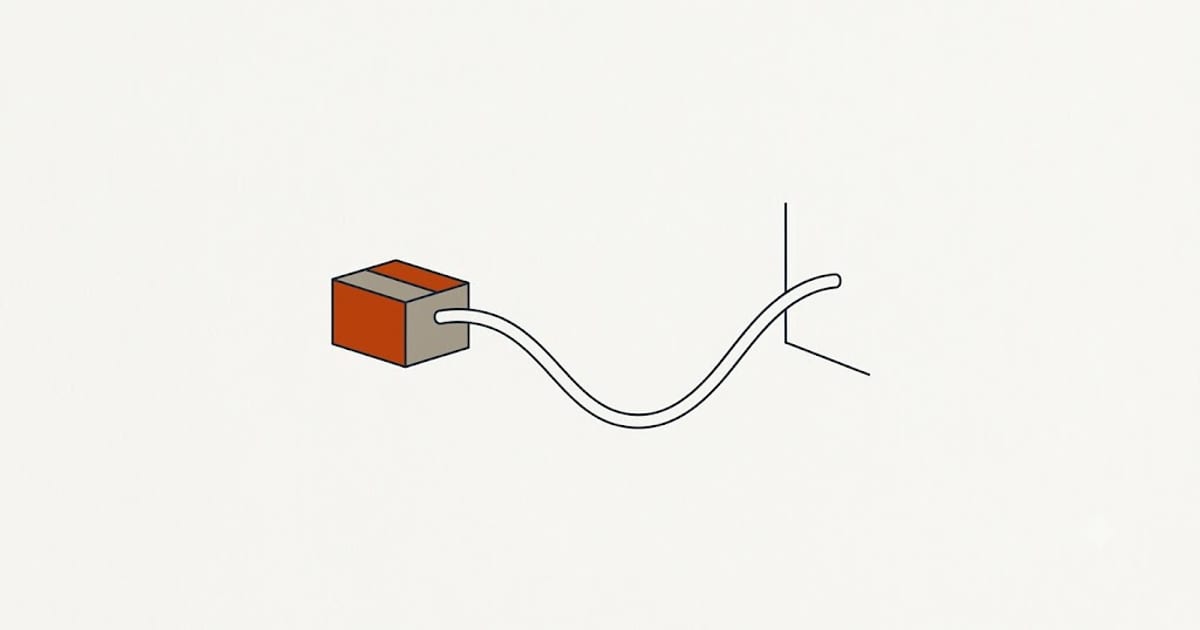
A bathroom fan that leaves the mirror fogged is rarely an underpowered fan. It is a fan connected to ductwork that cannot carry what it is rated to move.
Fans are rated at 0.1 inches of water column of static pressure. Real installations routinely run at three or four times that, and at 0.4 in w.c. a fan rated 110 CFM may be delivering 40.
1. Flexible duct, sagging
The standard fault. Flexible duct left slack across an attic, dipping between joists, is several times the resistance of the same length pulled taut — and worse than smooth metal by a wide margin at any tension.
It is invisible after the ceiling is closed, which is why it persists.
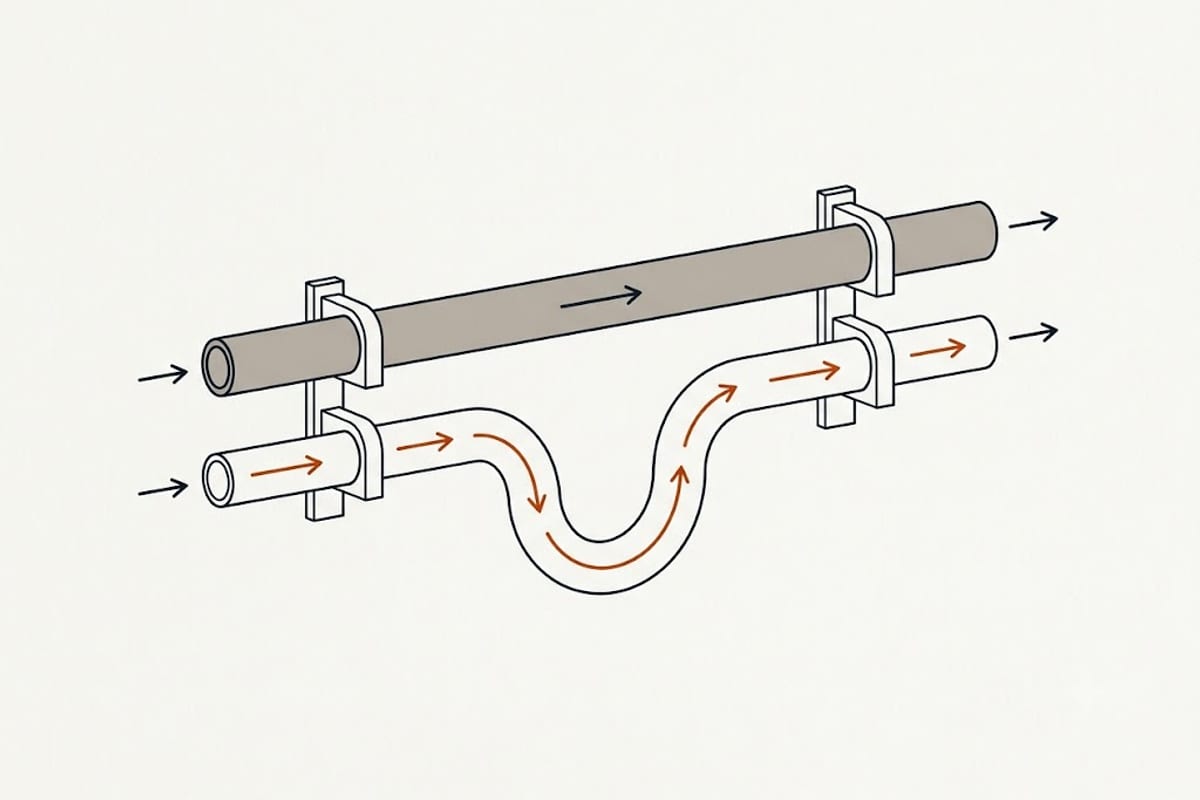
The fix is access: pull the run taut, support it every four feet, and cut off the excess rather than coiling it.
2. The duct is too small
A 110 CFM fan on 3-inch duct is strangled regardless of anything else. Most fans in the 80–150 CFM range want 4-inch minimum, 6-inch preferred on any run over about ten feet.
Check the fan's own specification — it states the duct size the rating assumes, and installers routinely fit whatever is already in the ceiling.
3. Too many elbows
Each 90-degree bend costs the equivalent of several feet of straight duct, and in flexible duct a tight bend partially closes the liner. Two or three elbows plus a long run is a large share of the fan's entire pressure budget.
4. The damper is stuck
There is a backdraft damper at the fan and usually another at the exterior termination. Both are light flaps, both get stuck with lint, and a closed damper produces a fan that sounds like it is working and moves nothing.
Go outside while the fan runs and feel for airflow at the vent cap. This is the two-minute check that should come first.
5. It vents into the attic
Not a performance problem — a code violation and a mould source. The moisture has to leave the building, not be relocated into the roof space where it condenses on the underside of the sheathing all winter.
This is common in older houses and in DIY installations. If you have never confirmed where the duct terminates, that is worth ten minutes with a torch.
Sizing, so you can rule the fan out
The industry rule for bathrooms under 100 ft² is 1 CFM per square foot, with a minimum of 50 CFM. A 40 ft² bathroom needs 50; a 90 ft² bathroom needs 90.
Above 100 ft², count by fixture instead: 50 CFM each for the toilet, the shower and the bath, and 100 for a jetted tub.
If the fan meets that and the mirror still fogs, the fan is not the problem — the list above is.
Two things that help more than a bigger fan
Run it longer. During the shower and twenty minutes after. A timer switch costs very little and it is the single most effective change available, because most of the moisture leaves the room after the water stops.
Give it make-up air. A fan can only exhaust what can get in. A tightly sealed door with no undercut starves it, and the fan then moves far less than its rating regardless of the ductwork. Half an inch of clearance under the door is the usual provision, and it is often missing after new flooring goes in.
When it genuinely is the fan
Noise but no airflow at the exterior vent with the damper confirmed open — the motor or the wheel has failed.
A fan over about fifteen years old. Bearings wear and the wheel collects dust; output falls gradually enough that nobody notices until it is halved.
Rated at 50 CFM in a bathroom over 50 ft². Undersized from the start, which does happen — builders fit the minimum.