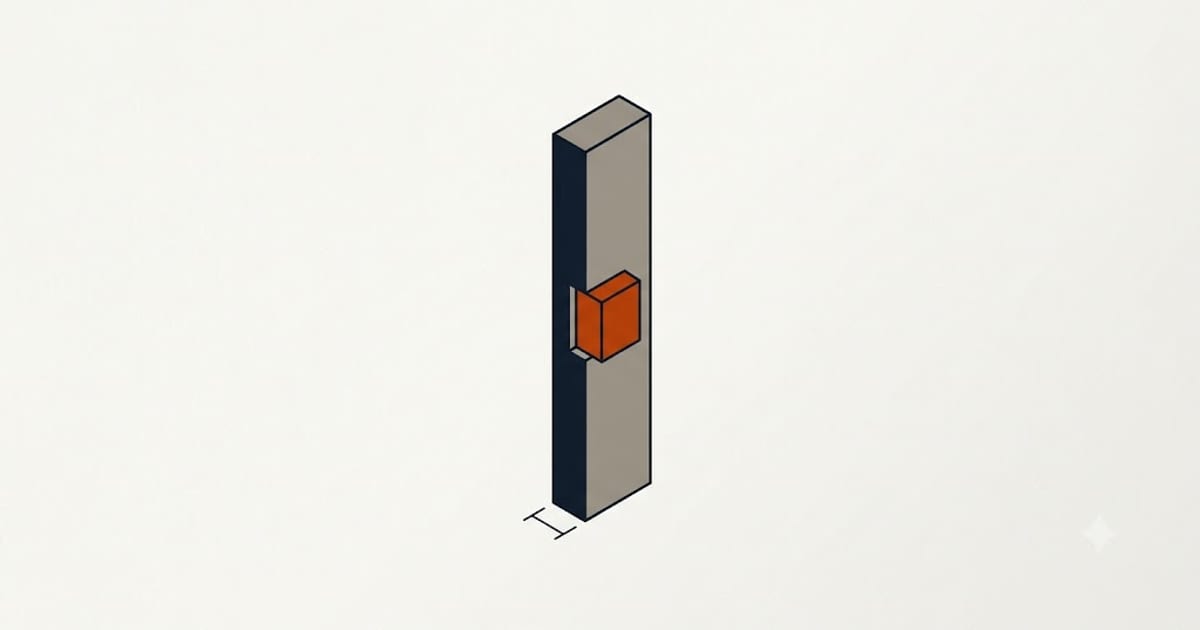
A shower valve is two parts. The body goes in the wall during rough-in and is buried behind tile forever. The trim — handle, escutcheon, finish — goes on at the end and is visible.
They have to be from the same manufacturer and the same product line. That commits you at rough-in to a brand you will live with.
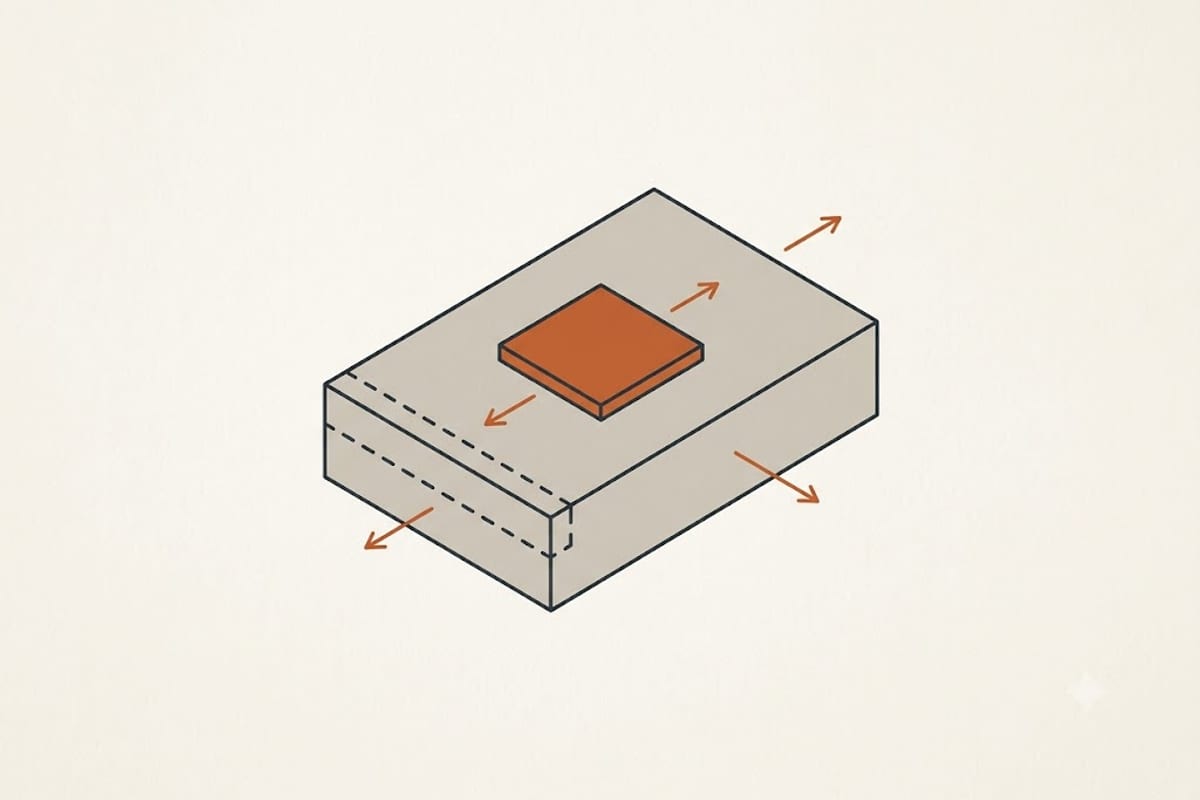
Pressure balance or thermostatic
Pressure balance is the standard and is required by code in most jurisdictions. It reacts to a pressure drop on one side — a toilet flushing, a washing machine filling — and reduces the other to keep the mix stable. It prevents scalding.
It controls temperature by ratio, so if the incoming hot water temperature changes, the shower temperature changes with it.
Thermostatic holds a set temperature rather than a ratio, using a wax element that responds to the actual water temperature. It is more precise, it recovers faster, and it costs more.
Thermostatic valves usually separate temperature and volume onto two handles, which many people prefer — the temperature stays set and only the flow changes.
Diverters and multiple outlets
A single showerhead needs a simple valve. Two outlets — a head and a hand shower — need a diverter, which may be integrated into the valve or separate.
Three or more outlets, or anything running two at once, needs a valve rated for the combined flow and often a larger supply. This is where a rain head plus body sprays runs into the limits of half-inch supply, and where the plumbing has to be planned rather than assumed.
Decide the outlet count at rough-in. Adding an outlet later means opening the wall.
Depth is set at rough-in and is unforgiving
The valve body has a marked plaster guard indicating the finished wall surface. Set too deep and the trim will not reach; set too shallow and it stands proud.
Finished wall depth means backer board plus mortar plus tile — and the tile thickness is a decision the tiler makes weeks later.
This is a common source of a problem discovered at trim-out, when the tile is already set. Confirm the intended tile and its thickness before the valve is set, and check the plaster guard against it.
Access afterwards
Cartridges wear out. Every valve will need one replaced within its life, and that is done from the front through the trim.
What is not accessible from the front is the body itself and its connections. On a shower backing onto a cupboard or a hallway, an access panel behind is worth considering; where the back wall is tiled on both sides, there is none.
Supply and flow
Half-inch supply is standard and adequate for a single head. Larger installations may want three-quarter inch to the valve, which is a rough-in decision.
Flow rates are regulated, and low-flow heads have improved a great deal. A well-chosen 1.8 gpm head performs better than a poor 2.5 gpm one, so the restriction is less of a constraint than it was.
The practical sequence
Choose the manufacturer and the line before rough-in. Buy the valve body then. Buy the trim later, in whatever finish, from the same line.
That order lets the finish decision stay open — which is what people actually change their minds about — while fixing the part that cannot change.
Buying the trim later, and why parts get discontinued
Manufacturers revise product lines every few years, and a trim kit for a valve body from a discontinued line can become hard to find. That matters most for cartridges rather than trim — a valve installed today will need a cartridge in ten or fifteen years.
Choosing a large manufacturer with a long history of parts support is a practical decision rather than a brand preference, and it is the argument for not buying an unbranded valve body to save money at rough-in.
Keep the model number of the valve body written somewhere that survives — inside the vanity door, or with the house papers. Identifying a buried valve from the trim alone is possible and tedious.