
Shower glass is cut to the actual opening after the tile is finished. That sequencing has two consequences: it is one of the last items on the schedule, and it exposes any tiling that is out of plumb.
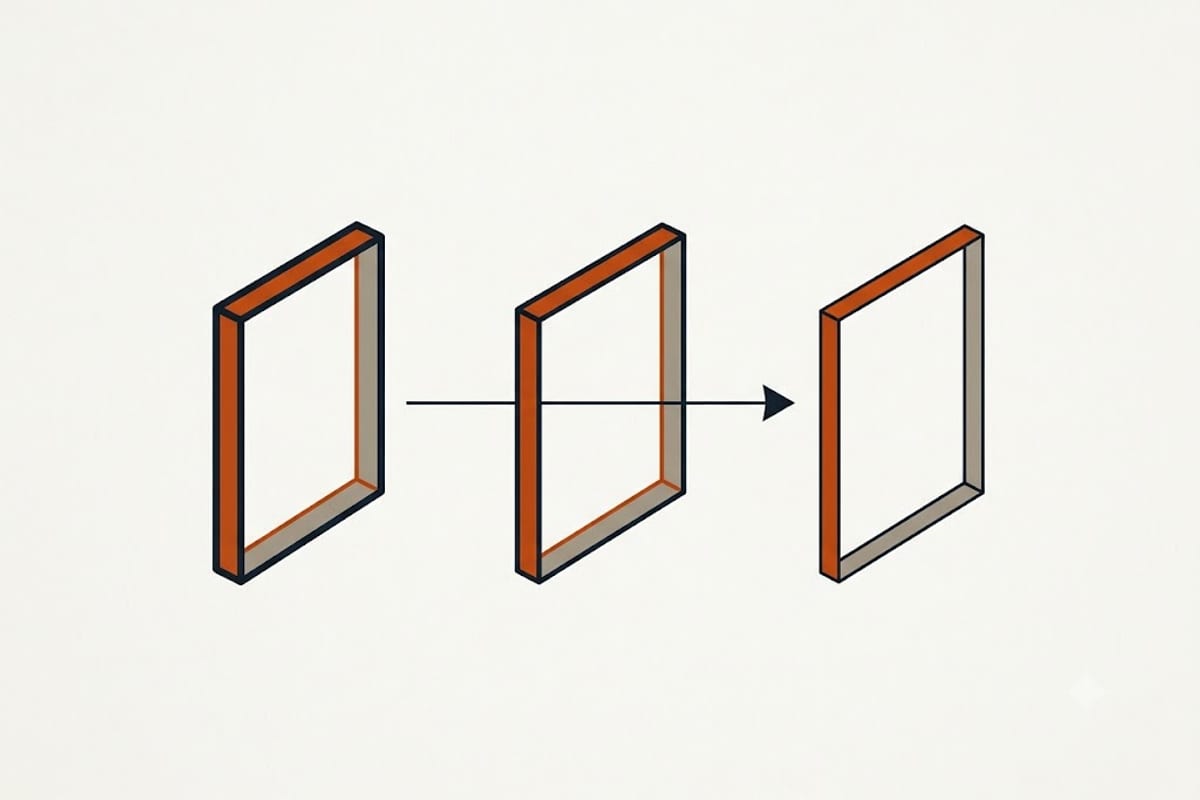
Framed
Metal channel around every edge of the glass and around the opening. Thinner glass, typically 3/16 inch.
Cheapest, most tolerant of an out-of-plumb opening because the frame takes up the discrepancy, and it seals best because the frame carries the seals.
The frame collects soap and mould, which is the reason people move away from it.
Semi-frameless
Frame on the fixed panels, no frame on the door edges. Glass usually 1/4 inch.
A middle position on price, appearance and tolerance.
Frameless
No frame. Thick glass — 3/8 or 1/2 inch — with hinges and clips fixed through it into the tile.
Best appearance, easiest to clean, and least forgiving. A frameless door hung in an opening that is out of plumb will not close correctly, and there is no frame to hide the gap.
It also seals least well. A frameless enclosure has gaps at the hinge side and under the door by design, and some water will escape. That is managed by shower geometry — a large enough enclosure, the head aimed away from the door — rather than by the glass.
Heavy. The hinges and clips need solid backing behind the tile, decided at framing.
Plumb matters more than people expect
For frameless glass, the tiled walls at the opening need to be plumb within a small tolerance — commonly around 1/8 inch over the height.
That is a tiling standard rather than a glass standard, and it is worth stating to the tiler before they start, because it constrains how they handle an out-of-plumb wall.
Where the wall is out and the discrepancy cannot be tiled out, semi-frameless is the honest answer.
Glass treatments
A factory-applied hydrophobic coating makes water sheet off and reduces mineral spotting. It is worth having and it is not permanent — it degrades over years and can be reapplied.
Without it, hard water leaves deposits that etch the glass permanently if left. A squeegee after each use does most of the same work for nothing.
Safety glass
All shower glass is tempered, and it is a code requirement. Tempered glass breaks into small blunt pieces rather than shards.
It also breaks unexpectedly and rarely, from edge damage sustained during installation. Nothing can be done about that beyond careful handling, and it is worth knowing that it happens.
Measuring and lead time
The glazier measures after the tile is set and grouted. Fabrication then takes one to three weeks depending on the shop and the configuration.
That gap is a normal part of the schedule and it surprises people who expected the bathroom to be finished when the tiling was. Plan for the room to be usable but unfinished during it.
Curtains, honestly
A curtain costs almost nothing, seals better than frameless glass, and is replaceable when it gets grubby.
For a family bathroom, or a rental, or a tub-shower combination, it is a perfectly reasonable choice and it saves a substantial line in the budget for something that will be looked at rather than used.
Where the door swings
A frameless door can be hung to swing out only, or in and out. Out-only is more common because water on the inside face drips into the shower rather than onto the floor when it opens.
In a small bathroom the swing has to clear the vanity and the toilet, and that constraint sometimes forces a sliding door or a fixed panel with a walk-in opening instead.
Check the swing on the drawing before the enclosure is designed, not when the glazier arrives to measure.
The bottom sweep and side seals
Frameless enclosures use a clear vinyl sweep along the bottom of the door and sometimes a seal on the hinge side. Both are consumables — they discolour and go brittle in a few years.
They are cheap and easy to replace, and they are the part that keeps a frameless door from leaking noticeably. Knowing they exist and are replaceable saves assuming the enclosure has failed.